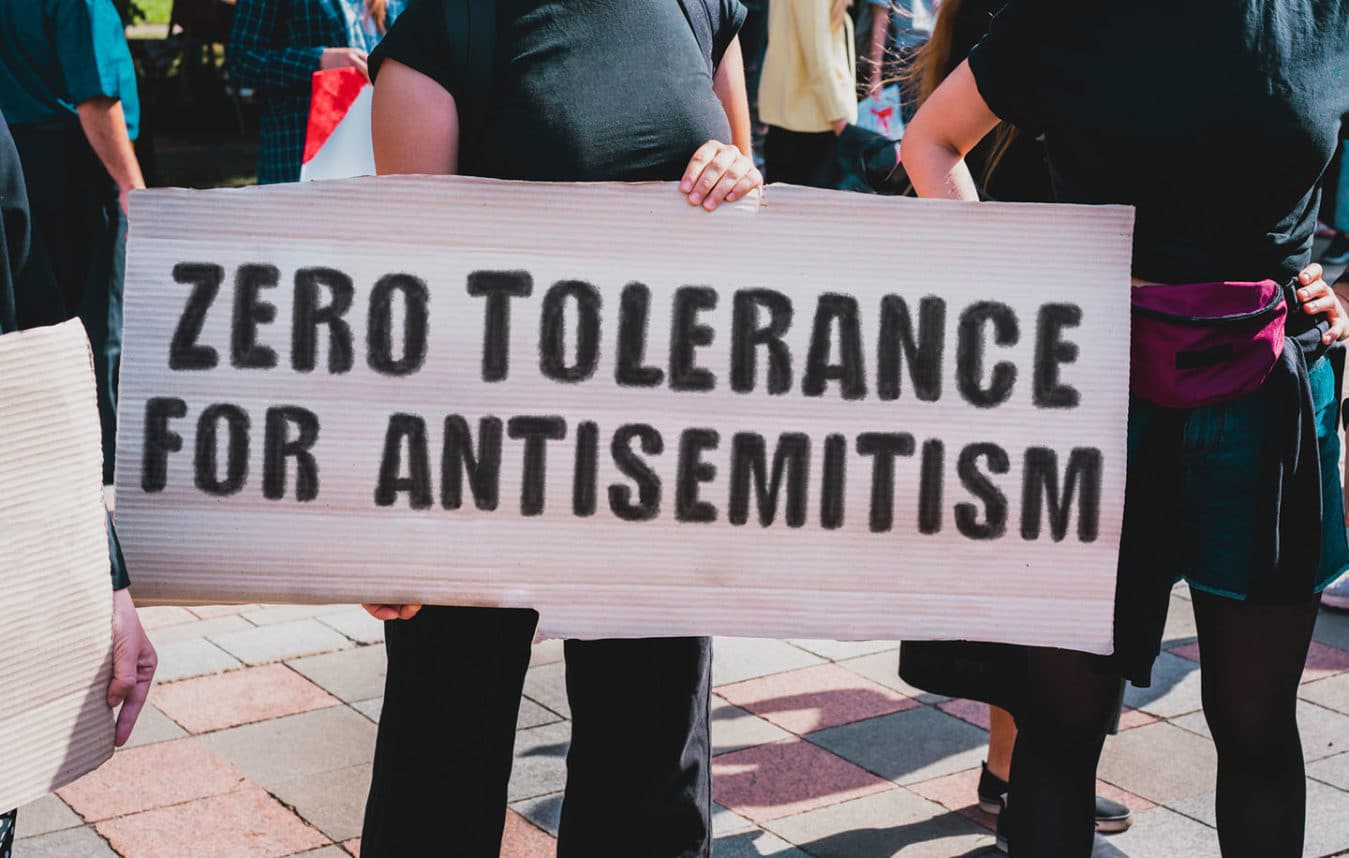
Anti-Semitism is on the rise. On a virtually daily basis at least one new incident of antisemitic activity is reported, here in the United States and in countries around the world. This bigoted treatment of the Jewish people—which has continued for over 2,000 years and culminated in the murder of some six million Jews, seemed largely to have faded into the fringes of society for several decades that followed the Holocaust. Sadly and shockingly, however, anti-Semitism is once again metastasizing and appears to be seeping into the cultural and political mainstream. And, as it has done throughout history, the so-called “new” anti-Semitism has morphed to include demonization and delegitimization of the modern representation of the Jewish collective: the State of Israel.
For those of us who devote our time, energy and resources to exposing and fighting this virus, aptly described as “the oldest hatred,” and supporting the continued thriving of the Jewish state, the preceding paragraph is certainly not news. And while there may be many nuanced differences in our approaches, we can all agree that the problem is getting worse. Not only is anti-Semitism becoming commonplace and, in some contexts, surprisingly acceptable; it is growing in intensity. Anti-Semitism no longer finds expression through mere words alone, but is increasingly manifested through conduct, including vandalism and destruction of property, physical violence, and even murder.
While this situation undoubtedly presents cause for concern, for heightened awareness, and for increased efforts on our part, it also presents us with a tremendous opportunity. An opportunity that we cannot afford to squander. I daresay an imperative. In fact, it’s ironic, in light of the nature of our work, that like-minded organizations have not yet seized the opportunity to combine efforts.
When educating about anti-Semitism, I (not unlike many others) like to stress the importance of focusing less on organizational differences, and more on finding common ground. I talk to students and community members about developing relationships with non-Jewish individuals and groups, for example, and working with them toward common goals. This doesn’t require complete agreement on all issues. But we must possess the ability to identify and agree on the essentials of accomplishing the mutually desired outcome of combating anti-Semitism together. It also assumes the willingness to ignore non-essential differences in the furtherance of that outcome. This same ability and willingness are what we must adopt—immediately—if we sincerely hope to succeed in our shared goal of curtailing the spread of anti-Semitism.
I am not naïve as to some of the reasons for the lack of cooperation within this important area of our work, (for example, concerns about fundraising and about being perceived as the organization doing the best work in this space). Sometimes there is even infighting between Jewish groups, which sadly adds fuel to the flame of hatred being stoked by the enemies of Israel and the Jewish people—a flame we must work together to extinguish. We are all being naïve if we continue to allow concerns about funding to dictate a climate of competition rather than cooperation toward our shared urgent objective.
The enemies of tolerance are unified. They are consistent in strategy and messaging and there is a virtual absence (at least publicly) of any sense of competition or clamoring to be the best among the haters. Make no mistake: They have created a coordinated effort on many fronts and we must learn from their successes. Nothing less than a similar display of strength and unity—of consistency, cooperation, and collaboration—will suffice to effectively combat the virulent disease of anti-Semitism.
This reality has been rightly recognized by influencers throughout history, from Aesop to Patrick Henry to Winston Churchill, in the oft-repeated sentiment: united we stand, divided we fall. It is time we heed their warning. It is time we set aside our non-essential differences and move together in the same direction toward our common purpose.
Carly F. Gammill is the Director & Counsel for Litigation Strategy at the Center for Combating Antisemitism, a division of StandWithUs.